


The right mattress for your sleeping position has a significant impact on the quality of your sleep and how alert you are in the morning. Back sleepers need a medium to firm mattress that supports the natural position of their spine, while side sleepers benefit from a softer mattress that conforms to their shoulders and hips. Stomach sleepers, on the other hand, need a firmer mattress to prevent their hips from sinking. In this article, we will discuss the specific requirements for different sleeping positions when choosing a mattress.
How does sleeping position affect mattress choice?
Your sleeping position determines how your body weight is distributed on the mattress and which parts of your body need the most support. The wrong mattress can cause back pain, neck problems and reduce the quality of your sleep. The right mattress, on the other hand, keeps your spine in a natural position throughout the night, reduces pressure points and improves blood circulation.
Different parts of the body need different support in different sleeping positions. When sleeping on your back, the weight is distributed evenly, but the lumbar spine needs support. When sleeping on your side, the shoulders and hips carry more weight, so these areas need to be properly sunk into the mattress. When sleeping on your stomach, the pelvic area needs special support to prevent the spine from being placed in an unnatural position.


About 10-15% of the population sleeps primarily on their backs, 60-70% on their sides, and 15-20% on their stomachs. Many people change positions during the night, which makes choosing a mattress even more challenging. An ergonomic mattress adapts to different positions and provides the right support in each position.
Good sleep and sleep ergonomics are always the sum of many factors, which are influenced not only by the mattress but also by the body shape and dimensions, weight, sleeping position, pillow height, and possible illnesses that affect sleep. All of these should be taken into account when looking for a suitable mattress.
For those who prefer a very thick and firm pillow, the new Hotel Luxus 1300 g pillow is the thickest standard-size option in the range (50 × 60 cm). This extra-high microfibre pillow has gold piping. It may suit a broad-shouldered side sleeper, for example; the right height also depends on mattress give and personal comfort.


Which mattress is best for back sleepers?
For back sleepers, the best option is a medium to firm mattress that supports the natural curve of the lumbar spine. A mattress that is too soft will cause the pelvis to sag, while a mattress that is too hard will leave the lumbar spine unsupported. The ideal mattress for back sleepers will keep the spine in a straight line from head to toe.
Among the material options, foam mattresses are excellent for back pain, as well as especially shapeable viscoelastic foams. They distribute weight evenly and support the curves of the body. Spring mattresses, on the other hand, offer good air circulation and durability. Pocket sprung mattresses adapt well to the contours of the body, providing pinpoint support.

Choosing the right pillow is just as important as choosing the right mattress . Back sleepers need a low to medium-high pillow that supports the natural curve of their neck without raising their head too much. A pillow that is too high can cause neck tension and can lead to morning headaches.
What kind of mattress is best for side sleepers?
Side sleepers benefit from a medium-firm or soft mattress that allows the shoulders and hips to sink in appropriately while keeping the spine in a straight line. A mattress that is too hard will put pressure on the shoulders and hips, while a mattress that is too soft will cause the spine to curve. The optimal mattress for side sleepers will conform to the body's contours in the areas of greatest stress.
Zone mattresses are an excellent choice for side sleepers, as they provide a softer area for the shoulders and firmer support for the pelvic area. Foam mattresses adapt to body heat and pressure, providing individual support. Latex mattresses, on the other hand, are naturally resilient and provide good support while maintaining comfort.
To maintain a straight spine when sleeping on your side, it is important to choose a pillow of the right height that fills the space between your shoulders and head. A pillow placed between your legs can also help keep your pelvis in the correct position and reduce strain on your lower back. An ergonomic mattress, combined with the right pillows, ensures the best possible sleeping position.
What is the right mattress for stomach sleepers?
Stomach sleepers need a firm or extra firm mattress that prevents the pelvis from sinking and keeps the spine as straight as possible. A soft mattress causes the back to slouch, which can lead to lower back pain. A thin, firm mattress is the best option for stomach sleepers, as it minimizes body flexion.
The best materials for stomach sleeping are dense foams and hard spring structures. Latex mattresses offer a good compromise between firmness and comfort. Avoid soft foam mattresses, as they do not provide sufficient support for the pelvic area. A thin mattress topper on top of a firmer mattress can provide some comfort without losing the necessary support.
Sleeping on your stomach is the most challenging sleeping position for your back health, and many experts recommend switching to sleeping on your side. If sleeping on your stomach feels like the only comfortable option, use a very shallow pillow or sleep without a pillow. A thin pillow under your stomach can help reduce back slouching.
How do I choose a mattress if I change my sleeping position at night?
For combination sleepers, the best option is a medium-firm universal mattress that provides adequate support in all positions. A mattress that is too hard or soft can be uncomfortable in some sleeping positions. Adaptive materials such as foam react to body movements and provide appropriate support in every position.
Zone mattresses are great for combination sleepers, as they offer different levels of support for different areas of the body. The center area is usually firmer to support the hips, while the shoulder and leg areas are softer. Hybrid models, which combine the best of springs and foam, adapt well to different sleeping positions.
Include changes of position in your mattress trial
Try moving calmly from one of your usual sleeping positions to another. Notice whether turning feels easy and whether the pillow stays in a suitable place afterwards. If you share the bed, try it together: your partner turning over and getting up are part of the same everyday experience. Record your observations for each option separately. This takes the comparison beyond the first soft or firm impression and includes your own movements and how the bed works for two people.
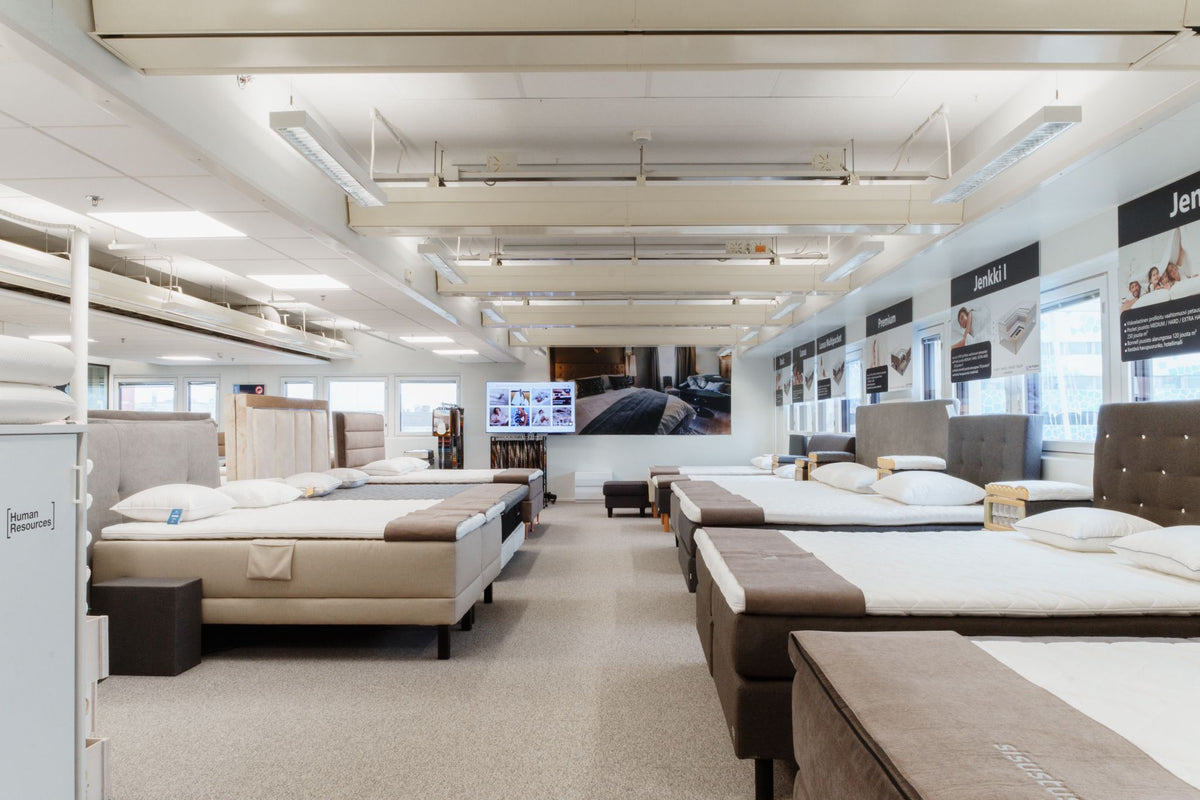
When choosing a mattress, it is worth considering your main sleeping position and choosing a model that leans slightly towards medium firmness. We recommend testing different mattresses before making a purchase decision. Sisustus1's selection includes various mattress pads and toppers , and you can view the products at our Helsinki showroom , where our expert staff will help you find the right option for you.
Explore our bed options in person
Visit our Helsinki showroom to explore almost our entire product range. See showroom details and arrange your visit. Contact us using our form for help finding options that suit your needs.





Leave a comment