


Do you choose your duvet cover based on a striking pattern or luxurious material? This is essential when comparing Marimekko's iconic designer sheets and technically sophisticated, plain hotel sheets. For many, Marimekko duvet covers are the crown jewel of their decor, while specialty stores focus on materials whose sole purpose is to improve your sleep and last for years.
One decorates the bedroom, the other optimizes the sleeping experience.
What makes Marimekko duvet covers so desirable?
Marimekko's appeal lies in its brand, history, and patterns that everyone recognizes. The Unikko pattern duvet cover is a design classic that brings color and character to the bedroom – for many, it's more art than textile. Marimekko typically uses high-quality, densely woven cotton percale, which feels crisp and fresh against the skin.

When buying Marimekko, you are primarily paying for the design and brand value. It's an excellent choice when you're looking for a striking eye-catcher for a duvet cover. In terms of durability, it's quality consumer-grade.
When should you choose something other than a design brand?
If your primary criteria are sleep quality, fabric feel against the skin, and exceptional durability, it's time to shift your focus from patterns to materials. Hotels and quality-conscious consumers choose fabrics designed to withstand continuous washing and provide maximum comfort. In such cases, thread count, weave type, and fiber quality are decisive.

When seeking the best possible sleep experience, the choice is no longer between brands but between materials. Cotton sateen, linen, and silk offer properties that traditional cotton cannot match.
Cotton sateen: Hotel-level durability and smoothness
The cotton sateen pillowcases and duvet covers favored by five-star hotels are no accident. Sateen weaving makes the fabric exceptionally smooth, soft, and subtly lustrous – it feels cool and luxurious against the skin. A high thread count (TC), often over 300, indicates a dense weave. However, it alone does not guarantee durability in institutional laundering; fiber length and quality are also key.

For example, the 300 TC thread count of Loffen Hotel Superior duvet covers makes them not only smooth but also extremely durable, which is why they are favorites in luxury hotels. This is an investment that pays for itself, as high-quality cotton sateen only softens with washing.

Linen and silk: The superior breathability of natural materials
Linen is a perfect choice for those who sweat easily during sleep. It effectively absorbs moisture and breathes exceptionally well, keeping you cool and dry throughout the night. When new, linen is coarse, but it becomes softer and more comfortable with each wash. It is a relaxed and natural material.

Silk, on the other hand, is the nobility of materials, especially suitable for sensitive skin and allergy sufferers. In addition to down and silk duvets, silk sheets are naturally hypoallergenic and antibacterial. Silk uniquely regulates temperature: it cools when hot and warms when cool. Its smooth surface also reduces friction, which can help prevent hair tangles and lines pressed into the skin.
Price vs. quality: Is an iconic pattern worth the extra cost?
It's not about which is better, but what you want to pay for. In the price of a Marimekko duvet cover, design and brand are a significant part of the overall package. You are paying for an icon of Finnish design, whose value is largely visual and emotional.
In the price of a plain, high-quality hotel sheet, on the other hand, you are paying purely for the quality of the material, the density of the weave, and the details of manufacturing. The price directly reflects the product's lifespan and physical comfort. You can get a technically superior and more durable duvet cover for the same price or even less if you don't pay for the pattern. Hotel-quality sheets do not have brand value to justify a high price; the price is based on the production and material costs of the product itself.
The choice is yours: do you invest in the bedroom's appearance or the quality of the materials? If your budget requires a choice, it's good to be aware of which you prioritize more.
Separate pattern preference from product specifications
First choose patterns or plain colours you like, then compare the named products' materials, sizes and care instructions. Include pack contents when comparing prices. This lets you assess decorative preferences and practical requirements separately.
How to identify a high-quality duvet cover – regardless of pattern?
Whether you're buying a patterned designer sheet or a plain classic, a few technical details will help you assess its true quality and durability.
Thread Count (TC): Indicates the number of threads per square inch. Over 200 TC is already good quality cotton, and cotton sateen with over 300 TC is very dense, smooth, and durable. You shouldn't blindly chase the highest number, but it's a good measure of fabric density.
Material Origin and Type: Long-staple cotton, such as Egyptian cotton or Pima cotton, is the most durable. Ensure the product is 100% cotton, linen, or silk. Synthetic blends are often inexpensive, but they don't breathe nearly as well. However, some hotel sheets are blends, especially in Finnish hotels, due to their durability and softer feel.
Finishing: Check the seams, buttons, and zippers. Many high-quality duvet covers, like Hoie models, use durable zippers, which are neater and easier than traditional ties or buttons.
Certifications: The Oeko-Tex 100 certification guarantees that the product contains no harmful chemicals. It is an important safety assurance, especially for those with sensitive skin and allergies.

With the right choice, you'll enjoy your bedding for years. If you're looking for a durable solution that improves your sleep, explore different materials and find what's right for you. High-quality duvets and pillows deserve equally high-quality and durable sheets.
Frequently Asked Questions
Does a Marimekko sheet last as well as a hotel sheet?
Marimekko sheets are made from high-quality cotton and withstand normal home use well. However, they are not designed for the same extreme wear and tear as hotel-grade sheets. High thread count hotel sheets are made to withstand continuous heavy washing without losing their smoothness, so they generally last longer.
What is a good thread count for a duvet cover?
Good basic quality is often said to start at 200 TC, but even with 120–160 TC, durable basic cotton can be achieved. Luxurious and very durable cotton sateen or percale typically has a thread count of 300–400 TC. Higher numbers than this do not necessarily add significant value in terms of comfort or durability, and can even reduce the fabric's breathability.
Why is cotton sateen so popular in hotels?
Cotton sateen combines three vital qualities for hotels: a luxurious feel, exceptional durability, and easy care. Its smooth surface feels pleasant against the skin, it withstands countless washes at high temperatures, and maintains its neat appearance for a long time. It is simply a cost-effective way to provide guests with a first-class sleeping experience.
Explore our textiles in person
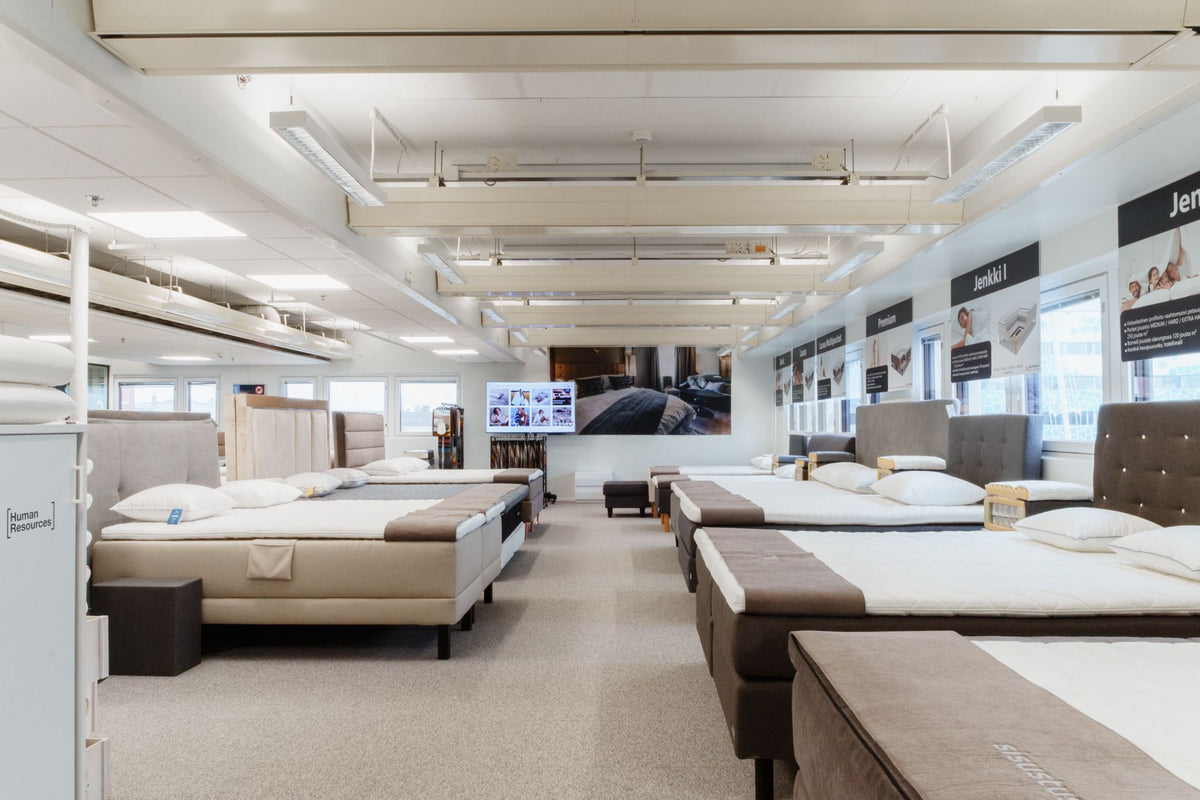
Visit our Helsinki showroom to explore almost our entire product range. See showroom details and arrange your visit. Contact us using our form for help finding options that suit your needs.





Leave a comment