


Night sweats are one of the most common reasons why people wake up feeling tired and uncomfortable. Often, the culprit isn't the room temperature or the duvet, but the very sheet that is closest to your skin all night. Choosing the right sheet material directly affects sleep comfort, and once you know which materials breathe best, you can make a better choice next time you shop.
In this article, we will go through the most important questions behind sweaty sheets and help you find the best sheet material for your sleeping style.
Why do some sheets make you sweat at night?
Sheets make you sweat at night when the material does not allow moisture and heat to escape from close to the skin. Sheets and bedding made from synthetic fibers, such as polyester, effectively insulate heat but breathe poorly, causing the body's moisture to become trapped between the mattress and the sheet.


The human body naturally regulates its temperature during the night, and this process includes mild sweating. When the sheet cannot wick moisture away from the skin, a stuffy and warm microclimate is created, disrupting sleep. This is especially common with cheaper sheets, where the material has been chosen based on price rather than breathability. In addition, a tight weave can restrict air circulation regardless of the material.

Record the materials throughout the bed
Check the product details of the mattress protector, duvet cover and duvet as well as the sheet. Note their materials and care instructions before choosing a new option. When comparing two sheets, keep the other bedding unchanged so that your decision reflects your own experience rather than a single material name.
Which sheet materials breathe best?
The best breathable sheet materials are long-staple cotton, linen, and bamboo. These natural fibers effectively absorb moisture, allow air to circulate, and dry quickly, keeping the sleeper cool and dry throughout the night.
Cotton is a classic choice and for good reason the world's most popular sheet fabric. Especially long-staple cotton, such as Egyptian or Pima cotton, is exceptionally soft and breathable. Linen, on the other hand, is an excellent option for hot summers, as it is a very airy and cooling material. Bamboo has gained popularity in recent years, and it has a natural moisture-wicking property that makes it a good choice for sensitive skin.
- Long-staple cotton breathes well and withstands many washes without quality degradation.
- Linen is the coolest option, especially in summer.
- Bamboo wicks moisture effectively and is soft for sensitive skin.
- Cotton percale woven fabric is dense yet breathable.
It is advisable to avoid sheets containing polyester or other synthetic fibers if night sweats are a problem. Although they initially feel soft, they hardly breathe.
What is the difference between cotton and bamboo sheets in terms of making you sweat?
Cotton absorbs moisture, while bamboo wicks moisture away from the skin faster. In practice, this means that bamboo sheets feel cooler against the skin, while cotton sheets are familiar for their softness and durability in long-term use.
Cotton is a very hygroscopic material, meaning it absorbs moisture effectively. This is an advantage, but when saturated, the sheet can feel somewhat damp. However, high-quality cotton dries quickly and is a very durable material that retains its properties even after hundreds of washes. This is one reason why cotton sheets have established their position as the preferred material in hotels.
Bamboo sheets, on the other hand, often feel silkier and cooler against the skin. Their moisture-wicking properties are excellent, and they are especially suitable for individuals who sweat a lot at night or have sensitive skin. Bamboo fiber is also naturally antibacterial, which is an added benefit for hygiene.

Which withstands washing better?

Cotton is known to be a more durable material for repeated washing. Hotels and hospitals prefer cotton precisely because it withstands demanding institutional laundering year after year. Bamboo sheets require slightly gentler handling, and it is not recommended to wash them at high temperatures.
How to choose the right sheet material according to your sleeping style?
Choosing the right sheet material depends on whether you sweat a lot at night, whether you sleep in a hot or cool room, and whether you have sensitive skin. Linen or bamboo is best for hot sleepers, quality cotton for steady sleepers, and bamboo fiber or long-staple cotton for sensitive skin.
First, consider your sleeping style. If you often wake up drenched in sweat, you should switch from synthetic materials to natural fibers immediately. If you sleep in a cool bedroom, cotton sateen or percale-woven cotton offers just the right balance between softness and breathability. Linen should be considered especially if sleeping feels stuffily hot in the summer.
At Sisustus1, our selection is based on the same materials that Finland's highest-quality hotels use year after year. Hotel-grade cotton sheets are designed to withstand demanding use while offering excellent sleeping comfort, making them a great choice for home use as well. When you choose your sheets according to the same criteria as professionals, you can't go wrong.
In summary: avoid polyester, favor natural fibers, and choose materials according to your sleeping style. A small investment in sheet material can significantly improve the quality of your sleep.
Explore our textiles in person
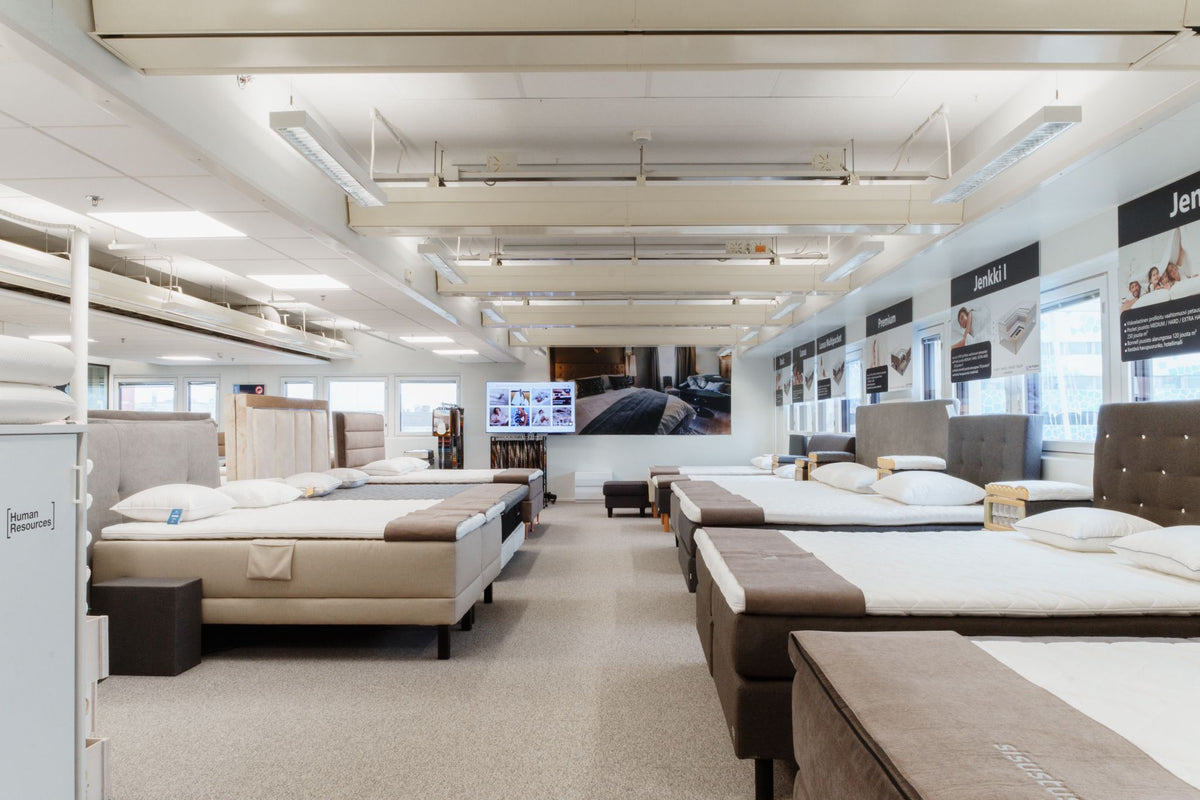
Visit our Helsinki showroom to explore almost our entire product range. See showroom details and arrange your visit. Contact us using our form for help finding options that suit your needs.





Leave a comment