


A successful living room interior isn't about chasing trendy furniture; it starts with the people who use the space and their needs. The living room is the versatile heart of the home: it must adapt to relaxed lounging, entertaining guests, and managing daily life. Therefore, planning should begin with the most important thing – people.
How to start decorating your living room: Functionality first
Before you delve into sofa selections or paint colors, take a moment to consider everything that happens or that you would like to happen in your living room.

Relaxation: Watching TV, reading, listening to music.
Socializing: Spending time with guests, playing games.
Work or study: Is a remote workspace needed in the room?
Children's play: Is there a need for floor space and easy-to-maintain surfaces?
Storage: Books, electronics, blankets, and toys.


Once the list is complete, dividing the space into areas serving different functions becomes much easier. A sofa set naturally creates a socializing area, and a combination of a bookshelf and an armchair forms a peaceful reading nook. Clear areas dedicated to specific activities make the space organized and easy to use, even if all furniture is in one open space.
Test the living room with guests in mind
Mark furniture positions and check movement when every seat is occupied. Consider where a guest can put a glass or book. If there is a sofa bed, check its open footprint before finalising the rest of the furniture layout.
The most important piece of living room furniture: How to choose the right sofa?
The sofa is usually the heart of the living room and the largest individual furniture purchase, so it's worth taking your time with its selection. A good sofa is an investment that lasts for years, enduring both time and life.


Size and shape determine space utilization
The size of the sofa must be proportionate to the room's dimensions. A too massive sofa will overwhelm a small space, while a slender piece of furniture will get lost in a spacious living room. Measure the space accurately and tape the outlines of the sofa on the floor with painter's tape. This will give you a concrete idea of how much free space will remain around it. It's good to leave at least 90 cm of clear space for main traffic routes to ensure effortless movement.
The shape of the sofa also affects the number of seats and the overall appearance of the space.
Straight sofa (2 or 3-seater): A classic and space-saving choice that fits many spaces. Easy to combine with armchairs.
Corner sofa: Offers ample seating and effectively defines a lounging area in a larger room. Works well in a corner or as a room divider.
Chaise lounge sofa: A combination of a sofa and a recliner. A perfect choice for relaxed lounging and watching movies.
Modular sofa: A flexible and customizable solution. Pieces can be assembled to create a configuration that perfectly suits your space, and its arrangement can be changed according to life situations.

Upholstery material: Aesthetics and practicality
The sofa's material should be chosen according to the family and usage habits. In a household with children or pets, fabric durability and easy maintenance become paramount.
The abrasion resistance of the fabric is indicated by the Martindale value. For normal home use, 15,000–25,000 cycles are sufficient, but for fabrics designed for very heavy use, the value can exceed 50,000. The fabric's lightfastness and pilling value (tendency to pill) also indicate quality. High-quality, removable, and washable covers significantly extend the life of the sofa.
Other living room furniture: Coffee table, storage, and side tables
Once the sofa is in place, other furniture naturally settles around it.
A coffee table is both a practical surface and an element that ties the seating group together. A suitable height for the table is the same as or slightly lower than the sofa's seat height. Leave about 40–50 cm of space between the table and the sofa to allow room for legs and easy reach to the table. A round table softens the look and facilitates movement, while several small tables add flexibility to the decor.
Storage furniture, such as bookshelves, sideboards, and TV units, bring order to the space. Combine closed and open storage solutions in a balanced way. Closed doors hide everyday items, while open shelves allow you to display books and beautiful objects to add personality to the space.

Textiles and lighting: The finishing touches for a cozy atmosphere
Furniture and hard surfaces form the frame of the living room, but it's textiles and light that make it a home. They bring softness to the space, improve acoustics, and create warmth.
A rug brings the furniture group together
A rug has a bigger role than many believe. It visually unifies the sofa group and dampens echo. The most common mistake is choosing a rug that is too small. A good rule of thumb is that at least the front legs of all furniture in the sofa group should fit on the rug. This creates a cohesive and finished look.
Layering with curtains, cushions, and throws
With textiles, you can easily update the living room's look and add comfort.

Decorative cushions: A few well-chosen cushions on the sofa bring color and texture. Boldly combine different sizes, shapes, and materials.
Throws: A cozy throw on the armrest of the sofa or in a basket on the floor invites relaxation. A quality throw is like a warm hug, and the same rules apply to its selection as to blankets in the bedroom: material and feel are key.
Curtains: Curtains soften the light coming through windows, provide privacy, improve acoustics, and complete the decor. Experiment with layering in curtains too: combine light sheer curtains with thicker, blackout curtains.
The three levels of lighting
Functional lighting is the foundation of a cozy living room. One ceiling lamp in the middle of the room is not enough; the space needs several light sources at different levels.
General lighting: A ceiling fixture or spotlights that illuminate the entire space evenly and brightly enough, for example, for cleaning. A dimmer is an excellent addition.
Task lighting: A reading lamp next to an armchair or a picture light on the wall. These lights are directed at a specific activity or object.
Accent lighting: Small table and floor lamps create soft pools of light and a warm atmosphere. They make the space inviting and homey.
Favor warm-toned (2700–3000 K) bulbs to create a relaxing and inviting atmosphere in the space.
A personalized living room: The final touch
Once the basic functions and furniture of the living room are in place, it's time to add your personal touch to the space. This comes from details: art, photographs, houseplants, and objects that are meaningful to you. Don't rigidly copy interior design magazine homes, but create a space that tells your and your family's story.
If you need help with the big picture or want to get a feel for materials, a showroom visit or professional consultation can open up new perspectives. We collaborate with numerous interior design firms and also offer B2B services. Explore our selection in our online store or visit our showroom in Helsinki.
Frequently asked questions
How to choose the right size rug for your living room?
A good rule of thumb is that the rug should be large enough so that all furniture in the sofa group (sofa, armchairs, coffee table) are at least partially on it with their front legs. This ties the furniture together into a cohesive group. Measure the width of your sofa and add at least 20–30 cm to both sides, so that the rug extends beautifully beyond the edges of the sofa. A rug that is too small makes the space look disjointed.
How much space should be left around furniture?
To ensure smooth movement, leave at least 90 cm of space for main pathways. Approximately 40–50 cm between the sofa and coffee table is sufficient – this allows easy access to the table while leaving enough legroom. It is good to leave space between armchairs and the sofa for a small side table or enough air so that the overall arrangement doesn't feel cramped.
How can I add more light and spaciousness to a dark living room?
Use light shades on walls, ceilings, and large textiles such as curtains and rugs. Opt for lightweight and slender-legged furniture that leaves floor space visible. A mirror is a classic way to reflect light and create the illusion of a larger space – place it opposite a window for the best effect. Also, invest in layered lighting with several different light sources.
What should I do if my living room is long and narrow?
Boldly divide the space into distinct functional areas. You can create a seating area with a sofa group at one end and, for example, a reading nook or workstation at the other. Use rugs to visually define these areas. Round shapes, such as a round coffee table or rug, effectively break up the "tunnel" effect of the space. Don't place all furniture against the walls; instead, bravely bring some pieces more towards the center of the room.
Explore our bed options in person
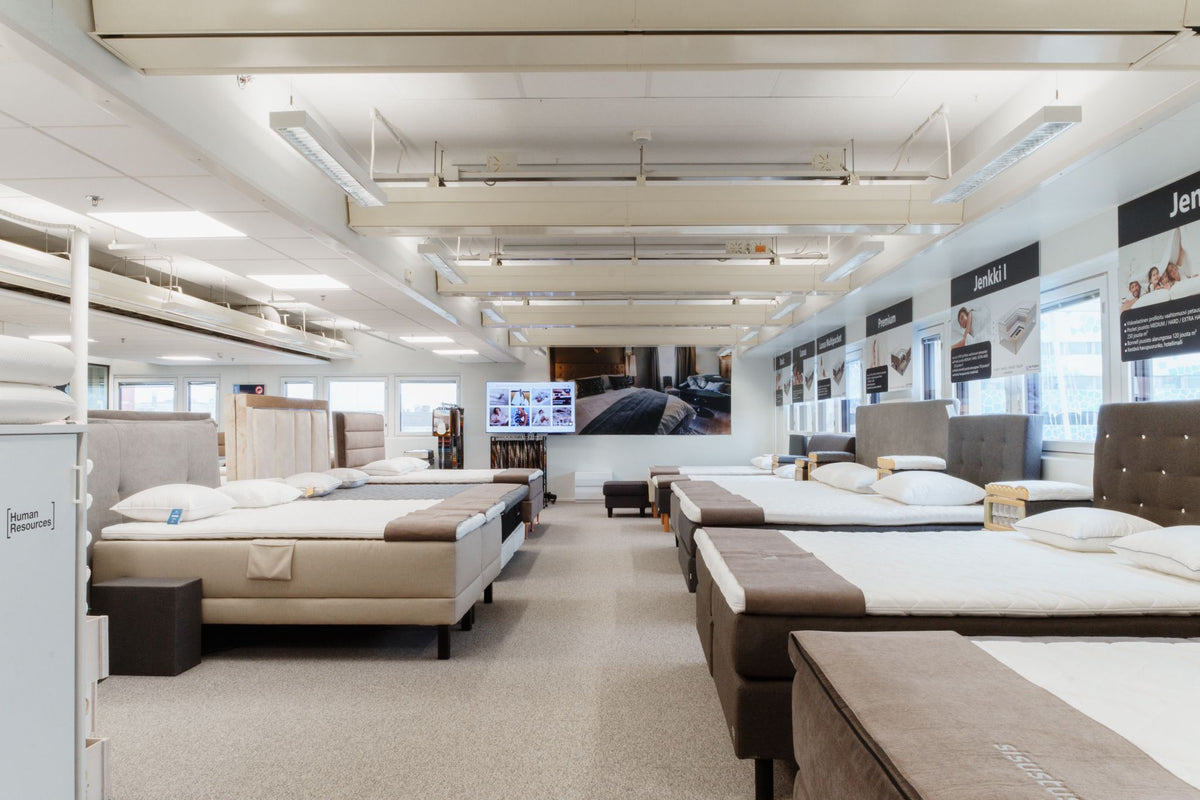
Visit our Helsinki showroom to explore almost our entire product range. See showroom details and arrange your visit. Contact us using our form for help finding options that suit your needs.





Leave a comment