


A weighted blanket applies more even pressure than a conventional blanket, which some people find calming. It may help with relaxation, but its effect on sleep varies. Suitability depends above all on the user’s ability to move and remove the blanket, their health and the manufacturer’s instructions. A child’s blanket should not be chosen on age or a percentage of body weight alone.
How does a weighted blanket work?
The sensation created by the weight is often called deep pressure or deep pressure stimulation (DPS). It has been compared with the feeling of a hug. The possible effects of weighted blankets on hormones are still being studied.
The experience is personal: some people enjoy even pressure, while others prefer a lighter blanket and more freedom to move. Use should be voluntary and comfortable. Remove the blanket immediately if it causes distress, overheating or difficulty breathing.
Benefits and risks for adults
Adults often buy weighted blankets to relax or as part of a bedtime routine. Personal comfort can help you judge the experience, but persistent insomnia should be assessed by a healthcare professional. A weighted blanket does not replace necessary treatment.
Possible benefits: relaxation and perceived sleep quality
Some studies have found improvements in adult insomnia symptoms. For example, a randomised trial involving 120 participants studied weighted chain blankets for four weeks in adults with insomnia and certain psychiatric diagnoses. The findings cannot be directly applied to every user or every commercially available weighted blanket.
If even pressure feels pleasant, a weighted blanket may be one part of a calm evening routine. A conventional duvet is also a good option: choose the warmth and feel you enjoy. For example, the Hotel Luxus 145 × 200 cm duvet, 1050 g is a warm fibre-filled duvet, not a weighted blanket.

Considerations: movement, health and warmth
If you have a condition affecting breathing, sleep apnoea or restricted mobility, check suitability with a healthcare professional before use. Medication affecting alertness or movement also matters. You must be able to remove the blanket easily by yourself.
The sensation of weight may feel unpleasant for someone with claustrophobia. Warmth depends on the fabric, filling and construction: not all weighted blankets are warmer than conventional fibre-filled duvets. Check the care instructions and whether your washing machine can handle the required load.
Weighted blankets for children: individual assessment and safety
For children, safety and an individual assessment come first. Discuss use with a healthcare professional who knows the child before trying a weighted blanket. A need to settle down or a diagnosis alone does not establish suitability.
Settling down and the limits of the evidence
Some children enjoy the sensation of weight, but evidence for improvements in children’s sleep and everyday functioning is limited. Weighted blankets cannot be generally recommended to treat ADHD or autism-related symptoms. Suitability depends on the child’s individual needs and reactions.
Start with a comfortable environment and a predictable settling routine that the child enjoys. If a weighted blanket is tried under an agreed professional plan, the child should want to use it and be able to communicate how they feel. An adult must supervise throughout use.
Safety guidance for children
Do not use a weighted blanket for a baby. The NICHD Safe to Sleep guidance warns against weighted blankets and swaddles for infants. Nor does reaching three years of age or 20 kg automatically make a weighted blanket safe for an older child: the product’s limits and the child’s abilities need individual assessment.
The child must be able to get out from under the blanket independently. Keep the head and neck uncovered, do not wrap the child inside it and never use it as a restraint. The blanket must not hang over the bed edges. Somerset NHS children’s therapy guidance says to supervise use, remove it once the child is asleep and not leave it on overnight. Stop immediately if breathing becomes difficult or the child overheats or becomes distressed.
Older adults and weighted blankets: ability matters
Age alone does not determine suitability. For an older adult, key considerations include mobility, health conditions, medication, skin condition and personal preference. A blanket that feels pleasant to one person may be too heavy for another to handle.
Possible comfort during rest
Some older adults may enjoy the even pressure during a quiet rest. However, agitation associated with dementia should not be managed with a blanket alone: a healthcare professional should assess the causes and appropriate care.
If sensations in your legs repeatedly disturb sleep, ask a healthcare professional to assess the cause. An ordinary, easy-to-move blanket is another option for relaxation.
Considerations: mobility and health conditions
The user must be able to change position, remove the blanket and get out of bed safely. If strength, mobility or understanding is insufficient, the blanket should not be introduced for independent use. Lifting and washing it also need to be manageable.
If the user has a significant health condition, fragile skin or a risk of pressure injury, discuss suitability and any supervision needs with a professional. A universal yes-or-no list of conditions is not appropriate because individual circumstances and abilities vary.
How to choose a weighted blanket
Choose a weighted blanket for the person and the intended use, not just by its weight in kilograms. Check the following before buying:
-
Weight: Follow the manufacturer’s instructions. The Royal College of Occupational Therapists guidance notes that manufacturers often recommend no more than 10% of the user’s weight. A weight percentage alone does not establish suitability or safety. The blanket must feel comfortable and the user must be able to get out independently.
-
Size: Choose a size suitable for the user, following the manufacturer’s instructions. It should not hang over the bed edges or hinder movement. Do not assume that conventional double-duvet sizing is appropriate for a weighted blanket.
-
Material and care: Compare the surface feel, filling, warmth and care instructions. Glass beads or another weighted filling alone do not determine the quality of the finished product. A soft minky surface can feel pleasant during a rest. The Cura Minky weighted throw weighs 6 kg, so it is not automatically suitable for every adult or child. See the weighted blanket range and the instructions for each product.
{"layoutMobile":1,"layoutDesktop":1,"buttonAlign":"Center","buttonText":"View product","productTitle":{"hue":199.43661971830986,"brightness":0.4117647058823529,"saturation":0.6761904761904762},"priceColor":{"hue":0,"saturation":1,"brightness":0},"discountPrice":{"hue":199.43661971830986,"saturation":0.6761904761904762,"brightness":0.4117647058823529},"buttonColor":{"hue":199.43661971830986,"brightness":0.4117647058823529,"saturation":0.6761904761904762},"textBottomColor":{"hue":0,"saturation":0,"brightness":1},"activeTitleButton":false,"moreProduct":"","moreProductUrl":"","rowNumber":1,"dynamicProductId":[{"id":"gid://shopify/Product/8549110022483","title":"CURA Minky weighted throw, 6 kg","handle":"cura-minky-painotorkkupeite-6-kg","currencyCode":"EUR","amountMax":"165.0","amountMin":"165.0","price":"165.00","compareAtPrice":null,"imagesUrl":"https://cdn.shopify.com/s/files/1/0669/0970/0406/files/Cura_Minky_-painotorkkupeite_6_kg_harmaa.jpg?v=1726591979","additionalImages":[],"urlStore":"/en/products/cura-minky-painotorkkupeite-6-kg","altImage":"Grey Cura Minky weighted throw rolled on a pouffe with the quilted section unfolded"}],"typeSearch":"product","device":"desktop","decimalsPrice":2,"aspectRatio":"1 / 1","isAutoPlay":false,"isNavigation":false,"isPriceDisplay":false,"isHideImage":false,"rowDynamic":"mot","activeDecimals":false,"hidden":false,"locked":false,"positionPrice":true,"currencyCodeCustom":"EUR","cssContent":"","isRemoveBranding":true,"componentId":"s1-616521630035-en-2","activeDynamicProd":true,"blockName":"Product"}

Using a weighted blanket should be based on personal preference and safe practice. RCOT recommends removing it once the person is asleep if it is used at bedtime. For a child or an adult who needs assistance, seek professional advice about whether a trial is appropriate and how to monitor it. A suitable choice feels comfortable and allows free movement.
Identify the product before checking suitability
Keep the weighted duvet's exact model, dimensions, weight and manufacturer's instructions. Use these details when checking suitability rather than only the general product category. Keep the removable cover's instructions separate from those for the duvet itself.
Explore our duvet options in person
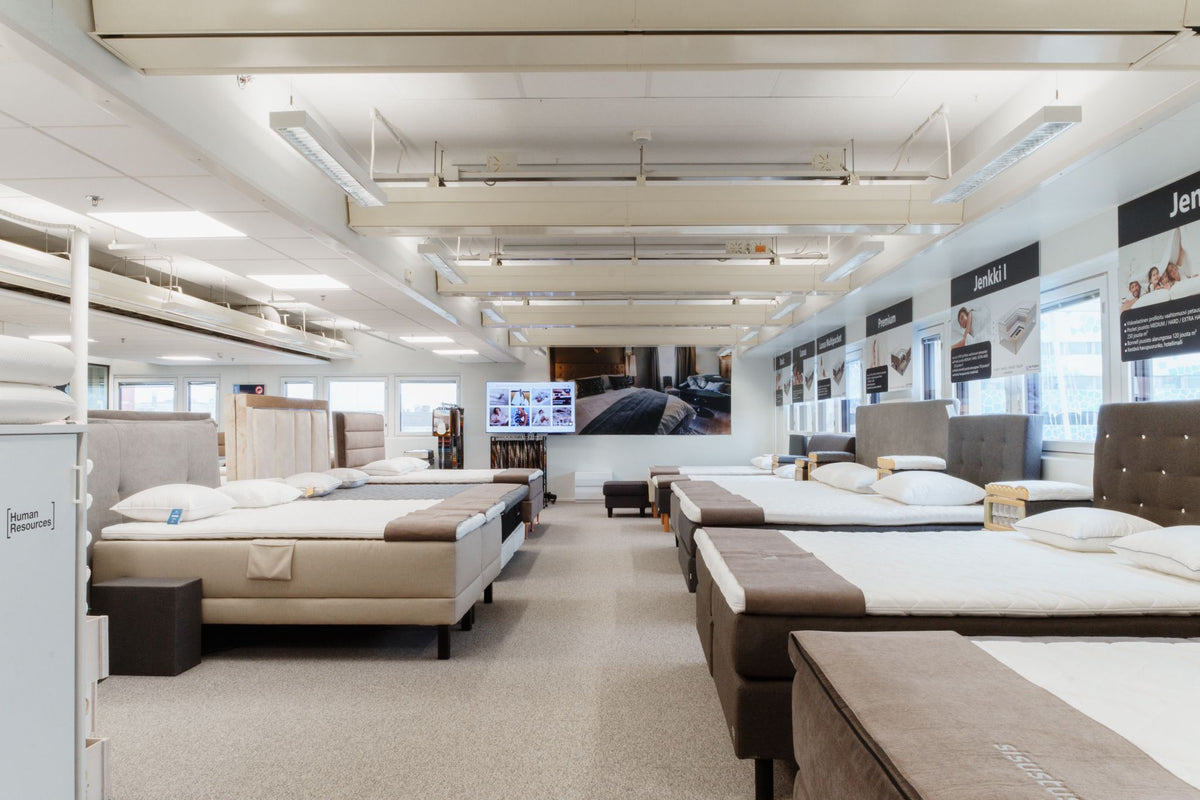
Visit our Helsinki showroom to explore almost our entire product range. See showroom details and arrange your visit. Contact us using our form for help finding options that suit your needs.





Leave a comment