


The most effective way to darken a bedroom is to combine well-fitted blackout curtains or blinds with reducing unwanted light leaks. Aim for a calm sleeping environment that feels dark enough for you. Complete darkness is not an absolute requirement for good sleep, and light’s effects depend partly on its brightness and timing.
How does light affect your sleep environment?
Light and darkness help regulate the body clock, with melatonin forming part of that system. Bright evening light can make it harder to wind down. A dark or dim, quiet and comfortably cool room supports sleep; the NHS sleep guidance also recommends these conditions.
Streetlights, headlights and outdoor lights may bring unwanted light into the bedroom. Sensitivity varies: a small light may go unnoticed by one person and wake another. Start with sources that shine towards the bed or feel distracting to you.
Start by darkening the windows
Begin with the largest source of light: the windows. Decorative curtains alone may not darken the room enough, so consider adding a dedicated blackout solution.
Blackout curtains: fabric and fitting matter
Dimout curtains reduce light, while blackout fabrics are designed to block light passing through the fabric more thoroughly. They often use a special coating or inner layer. If you want stronger darkening, compare blackout fabrics rather than relying on fabric thickness alone.
The result also depends heavily on installation. To reduce light leaks:
-
Choose a sufficiently wide curtain pole: A starting point is around 15–20 cm beyond each side of the window and around 15 cm above it. The coverage needed depends on the window, the pole’s distance from the wall and the curtain folds. Check for light leaks after fitting.
-
Consider a ceiling track: A ceiling-mounted track and a curtain of sufficient height can reduce light above the window. The result depends on track placement and the curtain heading.
-
Consider a wrap-around pole: These poles curve towards the wall at the ends, allowing the curtain edges to sit closer to it and reduce side gaps.
Blackout roller blinds and other window blinds
A blackout roller blind provides a neat option. Side channels or a cassette can reduce edge leakage more effectively than freely hanging fabric. Check the measurements, fixing points and manufacturer’s fitting instructions for your window.
Standard Venetian blinds provide privacy and reduce light, but gaps between slats and at the edges often remain. For stronger darkening, compare a blackout roller blind or blackout cellular blind. Construction and fitting determine the result.
Layer different solutions
If needed, layer a blackout roller blind with curtains. The blind handles most of the light blocking, while curtains cover the edges and soften the room’s appearance. This lets you adjust light through the day and choose curtains for the look you prefer.
Reduce distracting light leaks
After dealing with the windows, look for smaller light sources. Even an otherwise dark room can have light entering from unexpected places.
-
Under the door: First dim the hallway light or direct it away from the bedroom. Before fitting a door seal or draught excluder, check whether the gap is needed for ventilation. Do not block room ventilation to achieve darkness.
-
Electronics: Turn off unnecessary devices or dim their displays in the settings. Cover an indicator only if the device instructions permit it. Keep ventilation openings, sensors and safety indicators unobstructed.
-
Alarm clock: If the display bothers you, dim it, turn it away from the bed or choose an option with less visible light. Checking the time less often may also help you settle.
-
Smoke alarm: Do not cover the alarm, its openings or indicators, or move it from a suitable position to darken the room. Instead, adjust the bed or your sleeping direction to keep the light out of your direct line of sight.
Use an eye mask when needed
When travelling or sharing a room with someone on a different sleep schedule, an eye mask can be a practical alternative to darkening the whole room. Try one that blocks light and feels comfortable on your face.
Look for an eye mask that is:
-
Comfortably shaped: Space around the eyes may reduce pressure on eyelids and lashes. The right shape depends on your face and sleeping position.
-
Light-blocking: The material should block light and the mask should fit closely enough around the face, especially the nose, to limit gaps.
-
Adjustable: A suitably adjustable strap helps keep the mask in place without squeezing your head.
Complete a comfortable sleeping environment
Alongside darkness, bed comfort, pillow support, temperature and quiet all influence sleeping comfort. Choose a pillow that suits your position and mattress. The following textile examples complement comfort; they are not blackout products.
A calm evening routine helps you move from daily activity to rest. A soft hotel-style bathrobe can be a pleasant part of the evening. Slow down and choose a way to unwind that suits you.
Finish the bed with textiles that feel right for you. Bedding sets can help you put together a coordinated combination. Darkening, bedding and an evening routine work together to create a comfortable sleep environment.


Locate light gaps from the bed
Close the curtains and assess the room from your usual resting position while it is light outside. Note whether light enters around the edges, above the curtains or elsewhere. Target the observed gap before replacing the whole curtain arrangement.
Explore our options in person
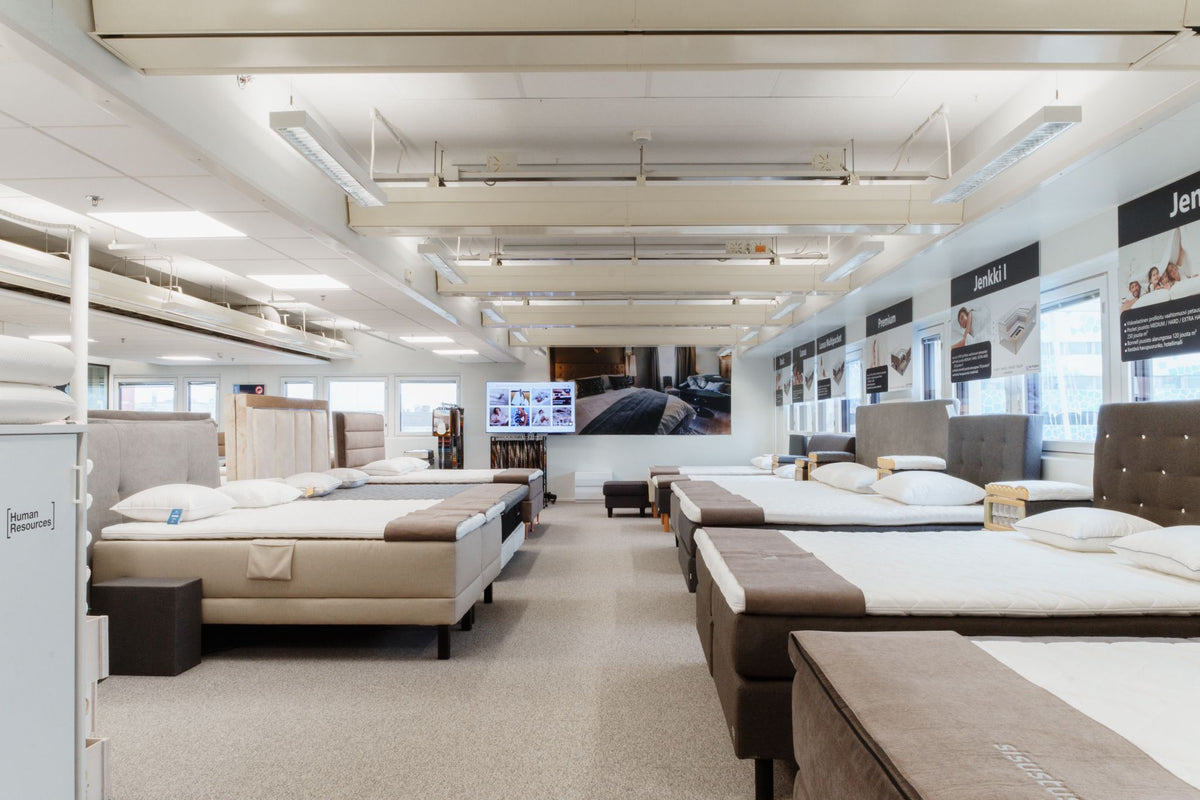
Visit our Helsinki showroom to explore almost our entire product range. See showroom details and arrange your visit. Contact us using our form for help finding options that suit your needs.





Leave a comment