


The right bed for back pain is not a rock-hard cot, but a bed that supports the natural alignment of your spine throughout the night. A mattress that is too firm creates pressure points on the shoulders and hips, while one that is too soft allows the back to sink into a harmful "hammock" position. It's not just about the firmness of the mattress, but the whole puzzle of sleeping ergonomics, where the mattress, pillow, and sleeping position all fit together.
For those who prefer a very thick and firm pillow, the new Hotel Luxus 1300 g pillow is the thickest standard-size option in the range (50 × 60 cm). This extra-high microfibre pillow has gold piping. It may suit a broad-shouldered side sleeper, for example; the right height also depends on mattress give and personal comfort.
What in a bed causes back pain?
The most common cause of morning back pain is simply a wrong or worn-out mattress that no longer provides the necessary support. Over the years, the materials of the mattress wear out and a hollow forms in the middle, forcing the spine into an unnatural position. In this case, the intervertebral discs and muscles have to work throughout the night trying to support the body. No wonder you wake up tired with a stiff back.

Back pain can also be caused by the mattress not being suitable for the sleeper's weight or position. A heavier person needs firmer support than a lighter one. The sleeping position also dictates terms: a side sleeper needs a mattress that flexes at the shoulders and hips, while a back sleeper needs support particularly for the lumbar region. If the mattress doesn't suit your body and sleeping style, your back will let you know.


How does the right mattress support your back? Medium-firm is often the best choice.
The persistent myth of a rock-hard mattress being a savior for the back is outdated. Experience and research show that for most people with back pain, a medium-firm mattress is the best solution. It's a functional compromise between comfort and support.
Think of your spine when you lie on your side. The right mattress allows your shoulder and hip to sink in just enough, keeping your spine straight from neck to hip. A surface that's too firm forces the spine into an unnatural upward curve, while one that's too soft allows it to collapse. A good mattress conforms to the body's shape, supports the waist, and distributes weight evenly. This allows your muscles to finally relax, which is a prerequisite for restorative sleep.
The importance of sleeping position: How to choose a mattress and pillow according to your position?
Choosing the right mattress always starts with your own sleeping position. What works for one person can be a disaster for another. The whole picture matters, and the right pillow is just as important as the mattress.
Side sleeper choices

For a side sleeper, it's most important that the mattress flexes enough at the shoulder and hip. This prevents numbness and painful pressure points. A pocket sprung or memory foam mattress is often a good choice. The role of the pillow is crucial: it must fill the space between the shoulder and head so that the neck stays in a straight line with the spine. A pillow that is too low or too high forces the neck into an incorrect position and causes pain that can radiate down the back. High and firm ergonomic pillows are generally the best solution.
Back sleeper choices

For a back sleeper, the primary task of the mattress is to support the natural curve of the lower back. The mattress should not be too soft, so that the hips do not sink too deeply. A medium-firm or even slightly firmer mattress is often the perfect choice. The pillow should support the neck but should not push the head too far forward. A medium-height pillow that conforms to the shape of the neck is typically the best. For example, memory foam pillows offer individualized support by reacting to body heat and weight.
Stomach sleeper choices

Experts do not recommend sleeping on your stomach, as it twists the neck and strains the lower back. However, if this is the only way you can sleep, the mattress must be supportive enough. A firm mattress prevents the midsection from sinking and reduces the arch in the lower back. For a pillow, choose one that is as low and soft as possible, or even sleep without a pillow. Many quality fiber pillows offer suitable low and breathable options for this purpose.
Bring your current bed details to the trial
Record your bed, mattress, topper and pillow models and what you would like to change about their feel. Try new options in your usual positions. These notes help the seller compare complete setups and document the combination you choose.
Material is more than a preference – memory foam vs. pocket spring
The mattress material is not just a matter of taste – it directly affects support, breathability, and the sleeping experience. For those with back pain, the most common options are memory foam and pocket springs.
Memory foam mattresses precisely conform to the body's heat and weight. They distribute weight exceptionally evenly and effectively eliminate pressure points. This makes them an excellent choice for those suffering from hip or shoulder pain, for example. The material also dampens movement, so it's a lifesaver if your partner tosses and turns at night. Traditional memory foam, however, can feel hot to some people.

Pocket sprung mattresses are made of hundreds of individual springs packed into fabric pockets. Because each spring flexes independently, the mattress provides precise and conforming support. Pocket springs respond quickly to body movements and offer a resilient surface. The material is also very breathable, making it a good choice for sleepers who tend to sweat easily.
Don't forget other parts of the bed: Topper and pillow complete the support
Even a good divan or spring mattress alone won't save the day. Sleeping ergonomics is a whole, where a topper and a pillow play a decisive role. With a topper, you can fine-tune the feel and support of the bed. You can add much-needed softness to a too-firm mattress or add firmness to a softer surface.
Ultimately, it all comes down to spinal alignment. You can spend thousands of euros on the best mattress on the market, but if the pillow is wrong, the whole package fails. The wrong pillow forces the neck into an incorrect position, and the tension travels down the entire spine in a chain reaction. So, make sure that in addition to the mattress and topper, your bed's pillows are also chosen to support your specific sleeping position and body. That is the final and most important step towards pain-free mornings.

Frequently Asked Questions
Is a hard mattress best for back pain?
No, this is an old myth. The general recommendation for back pain sufferers is a medium-firm mattress. It supports the natural curves of the spine without creating pressure points on the shoulders and hips. A mattress that is too firm can worsen pain, while one that is too soft does not provide enough support.
How often should a mattress be replaced?
A good rule of thumb is to replace a quality mattress every 7–10 years. The lifespan naturally depends on the materials and usage. If the mattress has a visible hollow, feels uncomfortable, or you constantly wake up with a stiff back, it's time to get a new one.
Can the wrong pillow cause back pain?
Yes, absolutely. If your pillow is too high or too low for your sleeping position, it will twist your neck into an incorrect alignment. This tension can radiate as pain to your shoulders and even down to your lower back. The right pillow keeps your entire spine straight.
What is the best sleeping position for back pain?
The best positions are usually sleeping on your back (with a pillow under your knees) or on your side (with a pillow between your knees). These positions help keep the hips and spine in neutral alignment and reduce strain on the lower back.
Explore our bed options in person
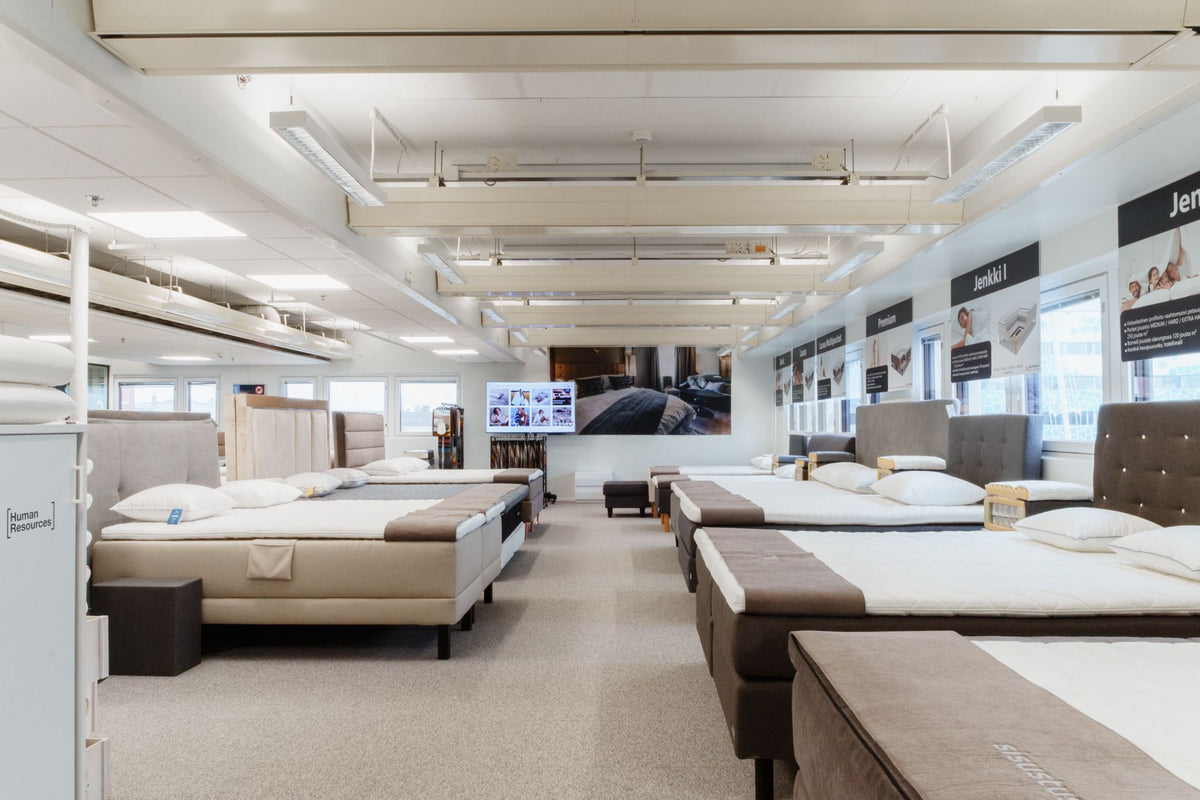
Visit our Helsinki showroom to explore almost our entire product range. See showroom details and arrange your visit. Contact us using our form for help finding options that suit your needs.





Leave a comment